Since 2001, I have been photographing the consequences of the sweeping human alteration of the Colorado River, in the Southwestern United States and Northwestern Mexico. The Colorado, I soon learned, was greatly reduced from what it once was and no longer makes its ancient rendezvous with the Sea of Cortez, between the Baja California peninsula and the Mexican mainland.
Forces north of the border had other destinations planned for the river’s water, and in 1922 divided its annual flow between seven U.S. states and Mexico. They built an extensive network of dams, stilling much of the once roiling river and creating the foundation on which the Southwestern United States has been built.
But as it has turned out, the foundation of everything, the premise of 1922, was based more on wishful thinking than fact and up to 25% more water has been promised to the river’s users than actually exists.
My project has been an exploration of the disconnection many Americans have with the source of their water, one of the few things in the world without which we will not survive. Inevitably, our entire nation will pay for this hubris. Only the degree of sacrifice is still somewhat negotiable.
Lake Powell was born in September 1963, with the completion of Glen Canyon Dam, with the intention of fulfilling the obligations of the Upper Basin States of the 1922 Colorado River Compact (Wyoming, Utah, New Mexico and Colorado) to deliver an annual allotment of water to the Lower Basin states (Nevada, California and Arizona) and Mexico. After more than two decades of ongoing droughtt and drop in its level to only 20% of capacity, it is no longer clear whether Lake Powell will continue to fulfill this or its power generation function.
Resting workers watch a Mexican military anti-narcotics plane from a former wetland in the Colorado River Delta.
A young onion picker ties rubber bands around bunches of scallions in a Sonoran field on a late autumn afternoon in Mexico's Colorado River Delta. His working day began in the darkness, at 5 AM.
The Blue Angels, the United States Navy's aerobatic flight group, performs a flyover of Hoover Dam as part of the celebration there of the centennial of the U.S. Bureau of Reclamation, the federal entity which built the dam in the 1930’s.
Intake pipes into Lake Mead which provide Colorado River water for nearby Las Vegas, Nevada. The city's water agency will be spending well over $1 billion to build a new intake and attached pumping station as insurance against continuing decline in the level of Lake Mead. The new intake will be near the bottom of the lake and would still provide water to Las Vegas, even if the lake level dropped below the intake towers at Hoover Dam, after which water could not be delivered downstream.
At Expedition Island, in Green River, Wyoming, where U.S. Civil War veteran and scientist Major John Wesley Powell and his party began both their 1869 and 1871 explorations of the Green and Colorado Rivers by wooden boat. Green River Butte is visible in the background.
At Expedition Island, in Green River, Wyoming, where U.S. Civil War veteran and scientist Major John Wesley Powell and his party began both their 1869 and 1871 explorations of the Green and Colorado Rivers by wooden boat. Green River Butte is visible in the background.
Fresh local oranges, mostly from groves irrigated with Colorado River water brought from over 300 km away.
The Central Arizona Project (CAP) Canal, at Bopp Road, outside Tucson, Arizona. The CAP Canal carries Colorado River water almost 500 kilometers to this point and then, beyond
The sprawl of Phoenix, Arizona from South Mountain Park.
Built on what was once the land of the Yavapai people, the town of Fountain Hills, built by Robert P. McCullough (who moved the old London Bridge to Lake Havasu) has the world's fourth tallest fountain. EPCOR, a private company, provides Colorado River water from the Central Arizona Project Canal to the community.
A broken sprinkler on Pebble Road, near the intersection with Green Valley Parkway in Las Vegas, Nevada. With an average annual rainfall of only 10.4 cm, much landscaping can only survive with regular irrigation.
Flyfishing on the Green River, below the Flaming Gorge Dam, in northern Utah.
The Big Surf water park in Tempe, Arizona, with the oldest recreational wave machine in the United States. The city receives Colorado River from Lake Havasu, over 300 kilometers away, via the Central Arizona Project Canal.
Harvesting head lettuce outside of Yuma, Arizona, where agriculture, which grows winter vegetables for the entire country, is almost entirely dependent on the Colorado River for irrigation.
Setting up the sound system for an outdoor December wedding at the Papago Golf Course, in Phoenix, Arizona.
People on a raft trip on the Colorado River through Grand Canyon National Park stop for a morning break at Red Wall Cavern.
A pickup truck churns up the dust from millions of years of Colorado River silt, deposited in the Mexican Delta, before the giant dams were built that changed everything.
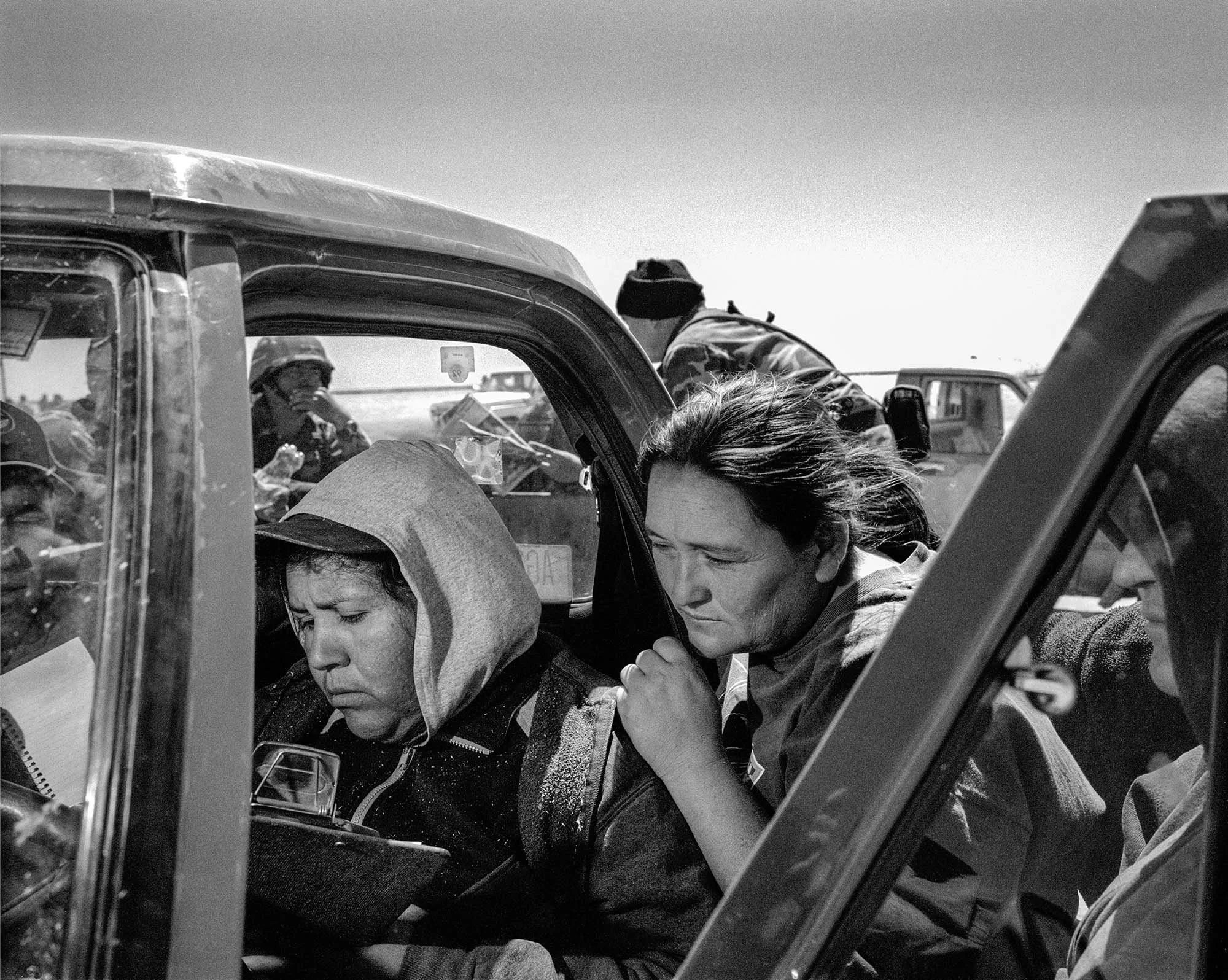
Monica Gonzáles, the daughter of the traditional chief of the Cucapás, signs her name to a citation given to her from Mexican government officials, backed by armed marines, preventing her people from fishing for corvina (sea bass) in the nucleus zone of the Upper Gulf of California Biosphere Reserve. A recommendation from the Commission of Indigenous Subjects for the Presidency of the Republic that the Cucapás be allowed to fish in the zone because of their ancestral traditions was disregarded.
A Cucapá youth fishes for crabs near the mouth of the Colorado River in Mexican state of Baja California Norté, waiting for his father to return in his boat from curvina fishing. Because the Colorado River itself no longer reaches the ocean because of diversions upstream in the United States, the water at the river channel's mouth is a brackish mix of sea water and irrigation runoff.
Mexican biologist Alejandra Calvo holds a Wilson's warbler caught in a research net erected in the Laguna Grande habitat restoration area in the Colorado River Delta.
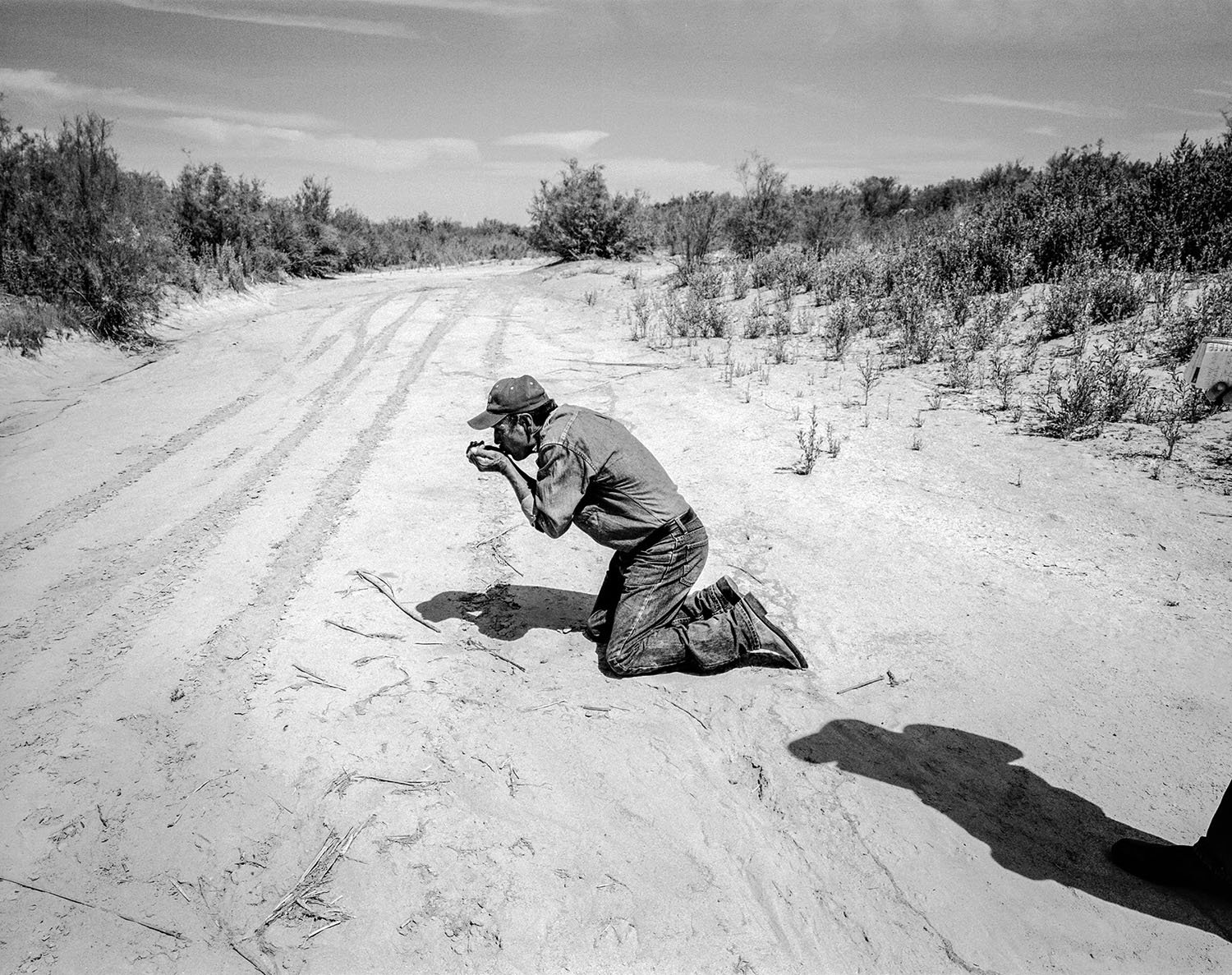
Local environmentalist Juan Butrón pretends to drink water from the dry channel of the Colorado River as he goes looking for the leading edge of the slowly moving pulse flow of water from the Morelos Dam, a few kilometers upstream. Within a few hours it would reach this spot, though in less than two months the riverbed would once again be dry.
"With the loss of memory the continuities of meaning and judgment are also lost to us. The camera relieves us of the burden of memory. It surveys us like God, and it surveys for us."
From About Looking by John Berger
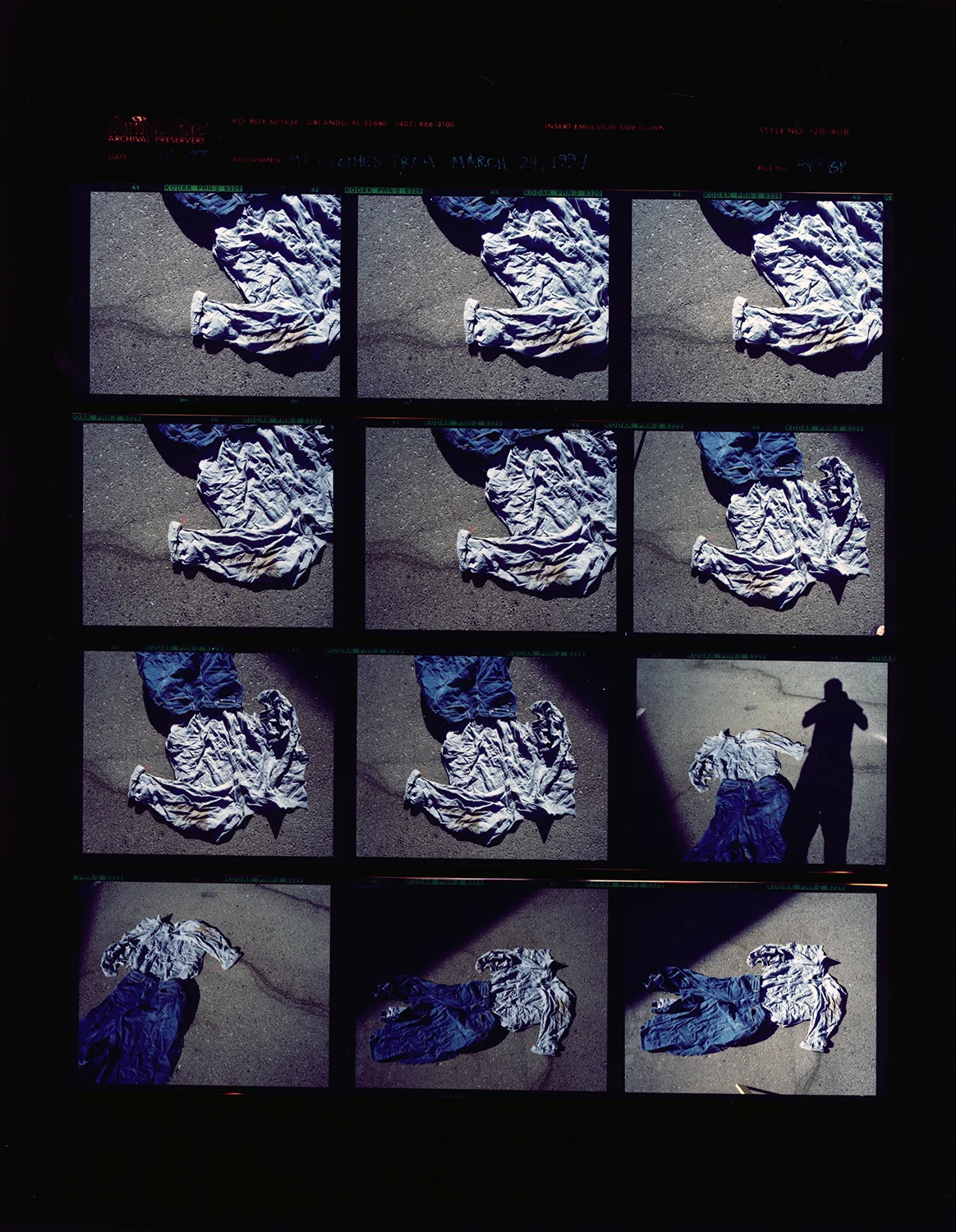
On one of the first spring days of 1997, while I was photographing in a Sacramento, California neighborhood, a half-dozen young men beat, kicked and stomped me nearly to death. When I began to re-surface about a week later, I found myself residing in Sierra Gates, a quiet, pine-paneled brain injury treatment facility, not quite clear on how I had arrived there or even why I was there at all. In the two months that followed I would take the first unsteady steps I needed to take to rebuild my life, which would include actually re-learning how to walk. I even needed to re-learn how to remember.
Six months after my release, as an exercise with my speech therapist, I began to return to Sierra Gates to photograph. Having been attacked because I was a photographer I needed, as much as anything else, to learn to be a photographer again. But I had taken pictures there for about a year before I learned that I was trying to photograph my own completely altered experience of life.
Twenty years ago I was wandering around in Nevada with my camera, compelled to photograph there and hoping that doing so would help me articulate the story I needed to tell to myself. I had just retreated back West from my first move to New York City, realizing that I would need a running start the next time if I were to survive there for real.
In assembling this website, I’ve revisited pictures taken back in the dark, early days of Somalia’s civil war, after the overthrow of the dictator, Mohamed Siad Barre. Back in 1992, I believed that if only the outside world could see what I was seeing, then that world would surely step up and save the country's people from catastrophic starvation. And the world seemed to have both the will and the means to do so in those days.
But I see now that the world had other plans. The United States-led military intervention, Operation Restore Hope, was poorly executed and the political situation on the ground, much of which had been shaped by the Cold War between the U.S. and the Soviet Union, was either badly understood or ignored. After an ill-advised special forces raid in Mogadishu disintegrated into a massive firefight that left 18 Americans and unknown hundreds of Somalis killed, Operation Restore Hope was abandoned.
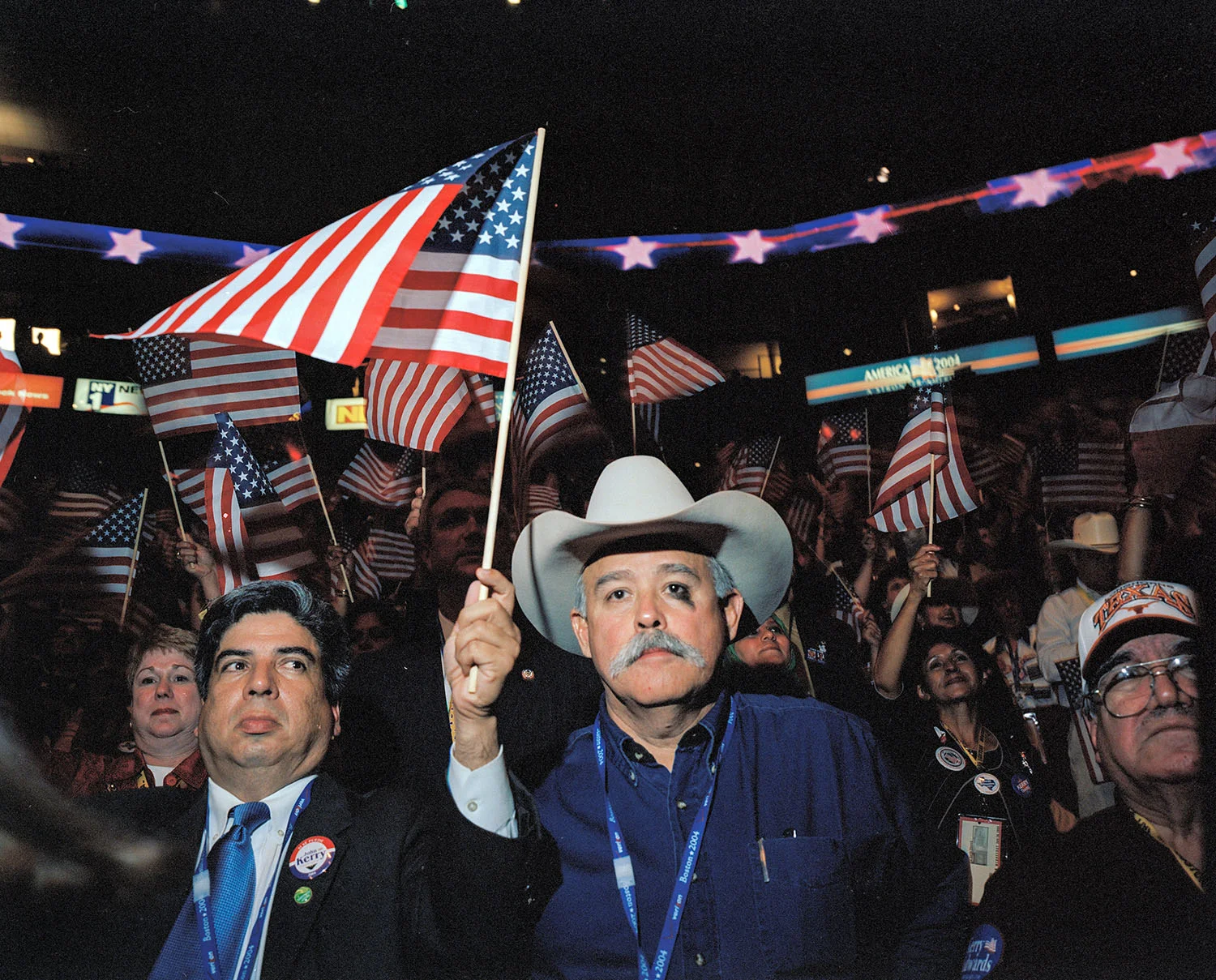
In 2004, I photographed both the Democratic and Republican National Conventions for the Canadian magazine, The Walrus. The Democrats were in Boston's Fleet Center and the Republicans were in New York's Madison Squared Garden.
In 2004, I photographed the Republican and Democratic party conventions for the Canadian magazine, The Walrus. As the presidential campaign began heating up in early 2016, I became curious to revisit those images, looking for clues to what lay ahead.
So much has happened both politically and technologically since the summer of 2004. Photojournalists were beginning to work with digital cameras at the time, but l was still working with a medium format rangefinder camera and Kodak color negative film, though what I was using then is no longer even made now. I'd digitally scanned about 100 of those pictures at the time, but shortly after this February's New Hampshire primary, I decided that I should finally make some work prints.
It was in this conversion from a purely digital existence back toward the pictures' more analog origins that the unexpected happened: my well-used Canon printer began distorting the tones and colors in the photographs, spitting out scenes that were unexpectedly surreal, yet at the same time somehow very true to life.
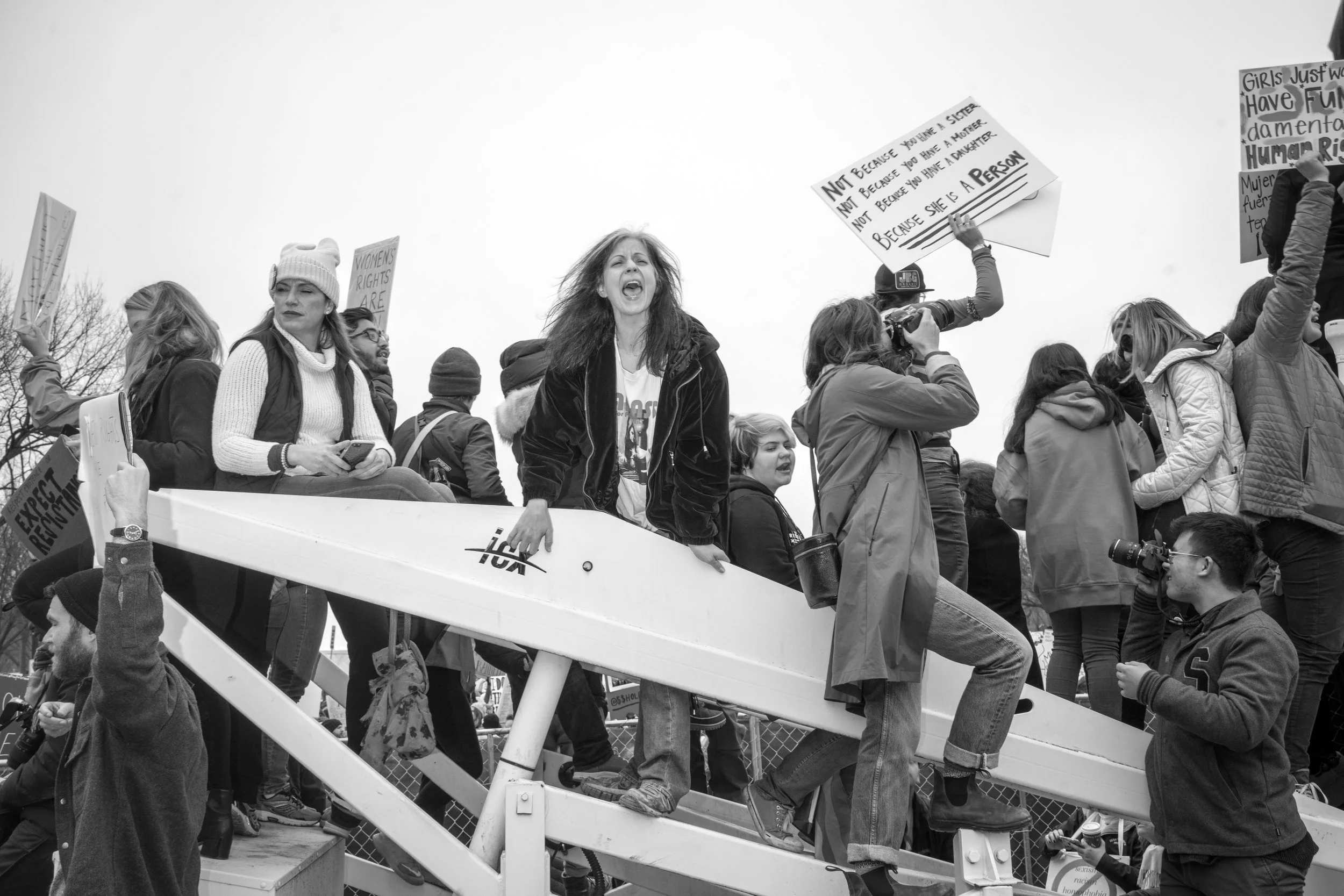
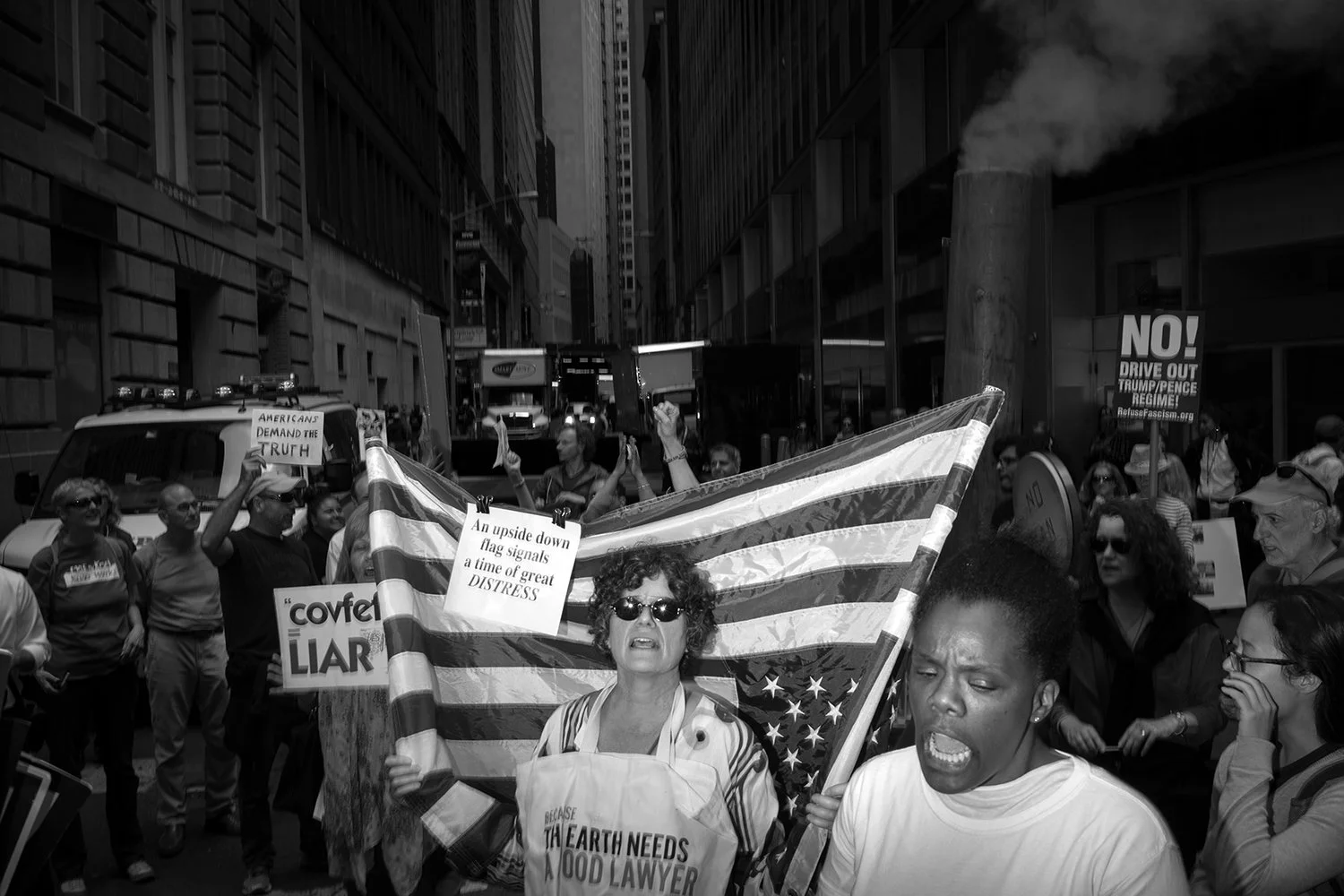
Much of the underpinning of the increasingly tortured American political landscape can be found in those first years of the 21st Century and perhaps we should not be so surprised now by what has happened. Do we lose important perspective on the world around us simply because we fall into looking at it in the same ways we have become used to? Are we victims of our own lack of imagination? And what are we missing now that will seem clear to us in 2028?